
Myopia FAQs: Understanding Nearsightedness and Eye Health
Myopia, commonly known as nearsightedness, is one of the most frequently diagnosed vision conditions in both children and adults. At M-Eye Vision in Katy, TX, questions about myopia are common, especially as rates continue to rise worldwide. Understanding what myopia is, how it develops, and why ongoing eye care matters can help protect long-term visual health.
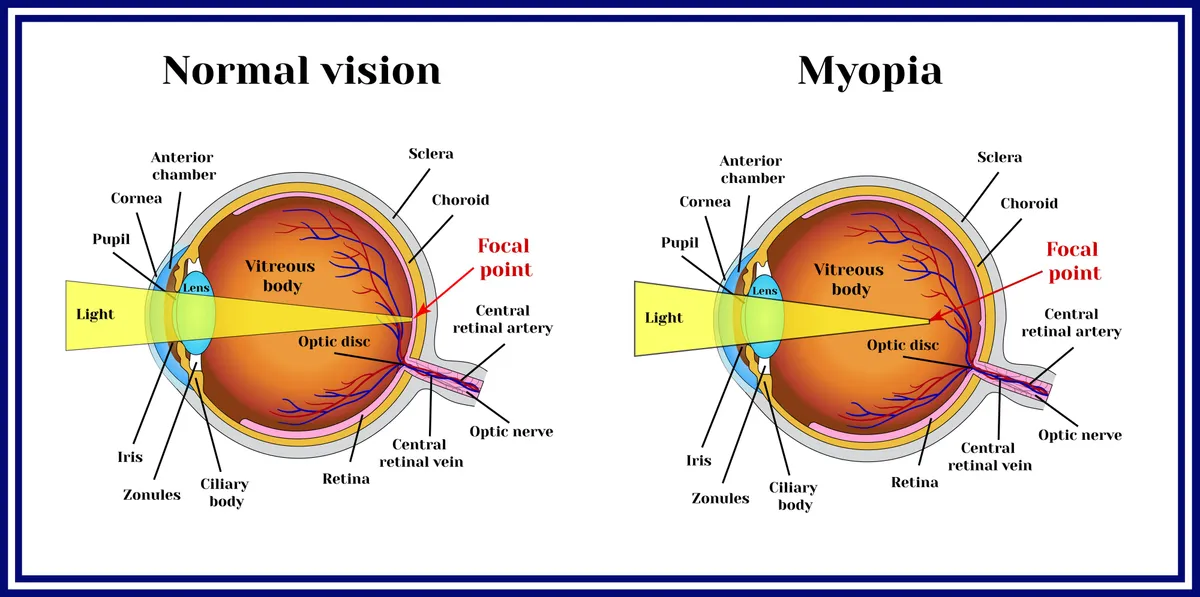
What Is Myopia?
Myopia occurs when the eye grows too long from front to back or when the cornea is too curved. As a result, light entering the eye focuses in front of the retina rather than directly on it. This causes distant objects to appear blurry, while close-up tasks such as reading or using a phone often remain clear. Myopia typically begins in childhood and can progress over time, particularly during growth years.
What Causes Myopia to Develop?
Genetics play a significant role in myopia, meaning children with one or both parents who are nearsighted have a higher risk of developing it. Environmental factors also contribute. Increased screen time, extended near work, and limited time spent outdoors have all been linked to higher rates of myopia progression. While myopia cannot be reversed, understanding these contributing factors allows eye care providers to monitor changes closely.
How Is Myopia Diagnosed?
Myopia is diagnosed through a comprehensive eye exam. During the exam, visual acuity testing measures how clearly distance vision is seen, while additional tests evaluate how light focuses inside the eye. Regular eye exams are especially important for children, as myopia progression can be subtle and may not always be noticed right away at home or in school settings.
Why Does Myopia Progression Matter?
Mild myopia is often easily corrected with glasses or contact lenses, but higher levels of myopia are associated with an increased risk of future eye health concerns. As myopia progresses, the eye’s structure can become more vulnerable, raising the likelihood of retinal issues later in life. Monitoring progression allows eye doctors to recommend appropriate strategies to support long-term eye health.
Can Myopia Change Over Time?
Myopia often progresses throughout childhood and adolescence before stabilizing in adulthood. However, changes can still occur later in life due to visual demands, health conditions, or natural aging of the eyes. Ongoing eye exams help ensure prescriptions remain accurate and eye health is consistently monitored.
The Importance of Ongoing Eye Care
Managing myopia goes beyond simply updating glasses or contact lenses. Regular eye exams provide valuable insight into how the eyes are developing and functioning over time. Early detection of changes allows for timely guidance and personalized care recommendations that support both clear vision and overall eye health.
For answers to myopia-related questions and personalized eye care, schedule an appointment with M-Eye Vision in Katy, TX. Call (281) 394-7886 to make an appointment and take an active role in protecting long-term vision health.